Mastering Organic Chemistry: Your Name Reactions List PDF
Table of Contents
Organic chemistry, with its intricate mechanisms and diverse transformations, can often feel like navigating a complex maze. But within this complexity lies a set of foundational pillars known as Name Reactions. From the Diels-Alder cycloaddition to the Wittig reaction, these named processes are the bedrock of synthetic organic chemistry, providing elegant and predictable pathways for molecule building.
Why Name Reactions Are Your Best Friends
For students, researchers, and chemists alike, a solid understanding of name reactions is non-negotiable. They are:
- Fundamental to Synthesis: They represent established and reliable methods for forming new bonds and functional groups.
- Exam Essentials: A significant portion of organic chemistry exams, from undergraduate to graduate levels (like the GRE Chemistry Subject Test or competitive exams), revolve around these reactions.
- Mechanistic Insights: Studying them helps in understanding broader principles of reactivity, electron flow, and stereochemistry.
- Language of Organic Chemistry: Knowing them allows you to communicate efficiently with other chemists.
The Ultimate Study Tool: A Name Reactions List PDF
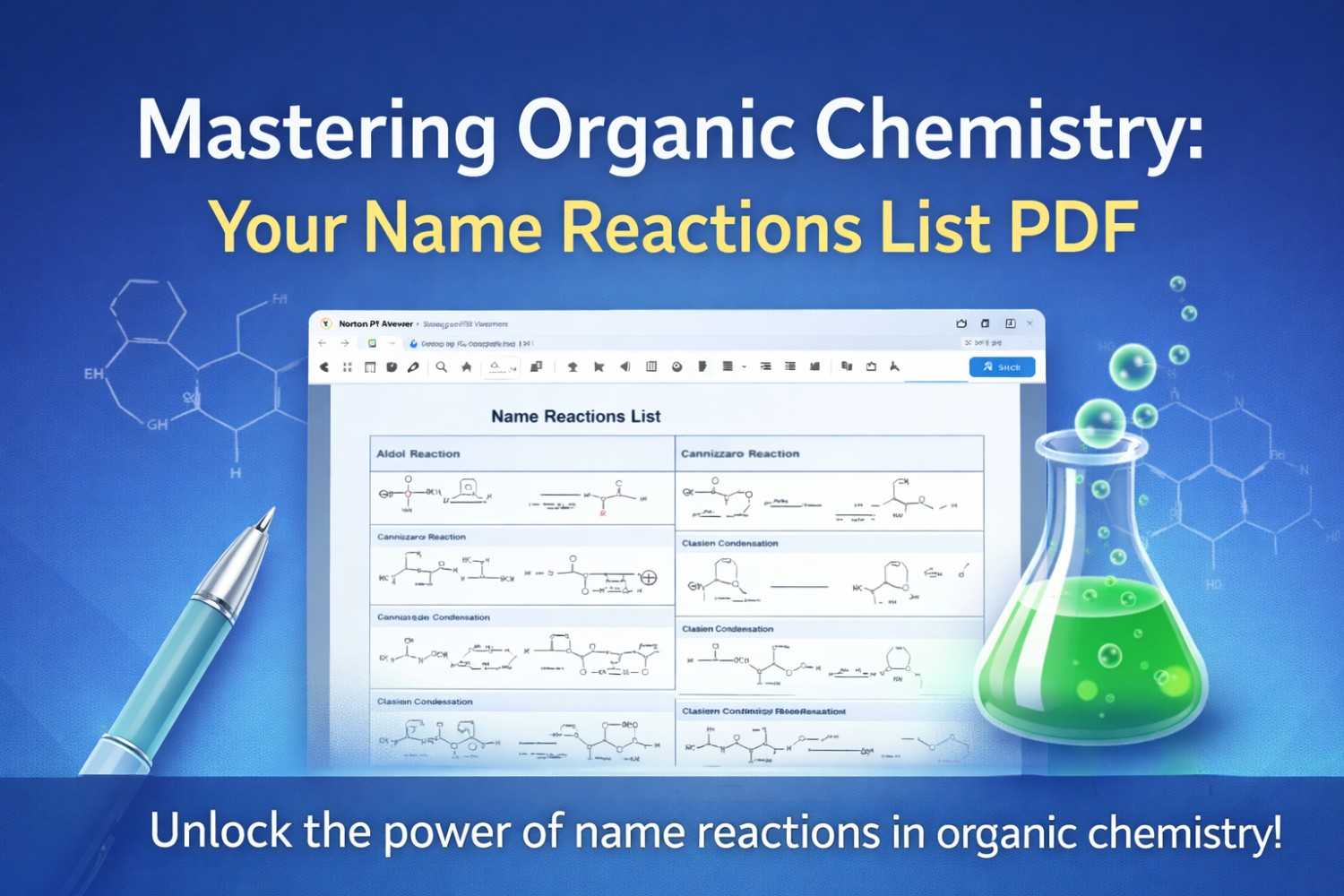
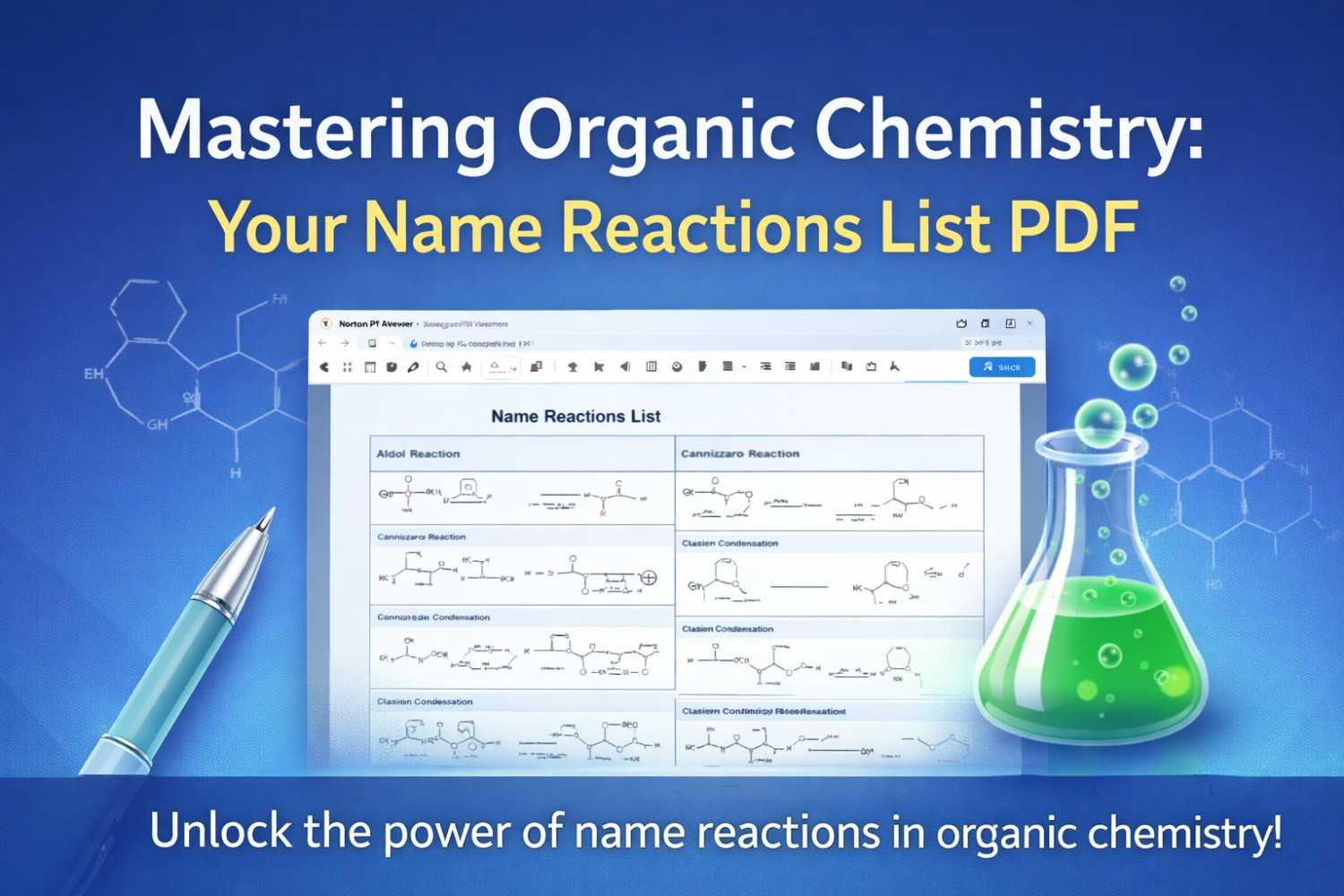
Given their importance, having a readily accessible, well-organized compilation of these reactions is invaluable. This is where an Organic Chemistry: Name Reactions List PDF comes into its own. Forget flipping through textbooks or disjointed notes; a dedicated PDF offers unparalleled convenience and efficiency.
Benefits of a Curated PDF List:
- Centralized Resource: All critical reactions in one place.
- Portability: Accessible on any device – laptop, tablet, phone – perfect for on-the-go review.
- Searchable: Quickly find specific reactions using keywords (if the PDF is text-based).
- Printable: Hard copies for active recall, annotating, and desk reference.
- Organized: Can be structured by functional group transformation, reaction type, or complexity.
What Your Name Reactions PDF Should Include
A truly effective list goes beyond just the name. Each entry should ideally feature:
- Reaction Name: Clearly stated.
- Reactants & Reagents: The starting materials and necessary catalysts/conditions.
- Product(s): The main organic product(s) formed.
- General Reaction Scheme: A clear visual representation using chemical structures.
- Mechanism Snapshot: A concise overview of the electron flow (often the most critical part!).
- Key Features: Regioselectivity, stereoselectivity, limitations, common side reactions.
- Applications: Where is this reaction typically used in synthesis?
- Related Reactions: Cross-references to similar or complementary processes.
How to Use Your PDF Effectively
- Active Recall: Don't just read. Cover the mechanism or products and try to predict them.
- Flashcards: Convert reactions into digital or physical flashcards for spaced repetition.
- Practice Problems: Apply the reactions to solve synthetic problems.
- Annotate: Use digital annotation tools or printouts to add your own notes, tricks, or memory aids.
- Regular Review: Consistency is key. Schedule dedicated time to revisit the list.
Creating Your Own vs. Finding One
While many excellent resources and pre-made PDFs are available online (from university chemistry departments, educational platforms, or even curated by students), creating your own personalized PDF can be an incredibly powerful learning exercise. The act of compiling, organizing, and summarizing each reaction solidifies the concepts in your mind.
Whether you download a comprehensive resource or painstakingly craft your own, a well-structured Name Reactions List PDF is more than just a document; it's a dynamic tool that empowers you to conquer the complexities of organic chemistry and excel in your studies and beyond.