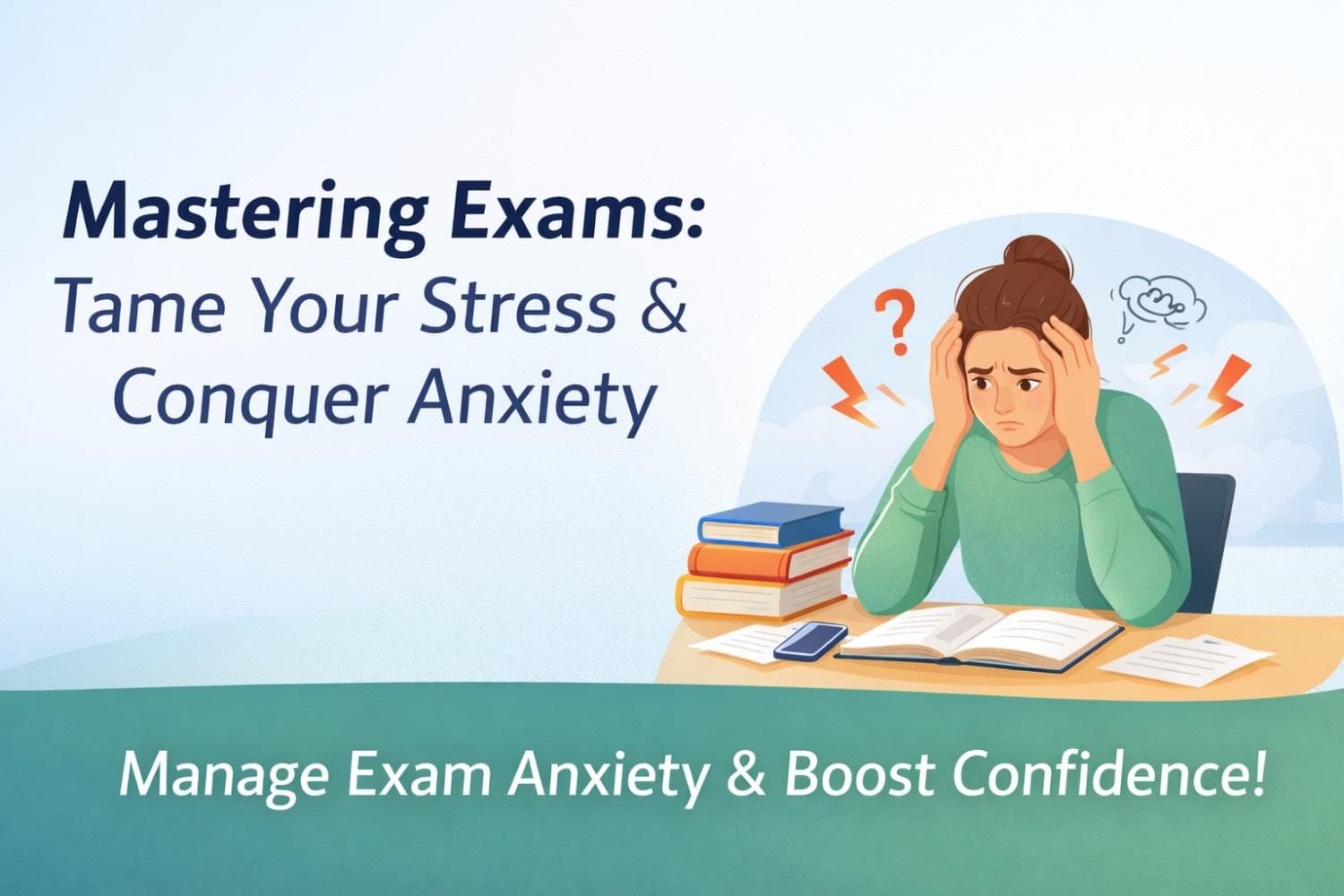
Mastering Exams: Tame Your Stress & Conquer Anxiety
Table of Contents
Exam season can bring a wave of pressure, and with it, stress and anxiety. While a little bit of stress can be a motivator, excessive anxiety can hinder your performance and impact your well-being. But fear not! You have the power to manage these feelings and approach your exams with a calmer, more confident mindset.
Understanding Exam Stress and Anxiety
It's completely normal to feel some degree of stress before exams. This often stems from fear of failure, pressure to succeed, high expectations, or simply the unknown. Anxiety, however, can manifest with more intense physical symptoms like a racing heart, difficulty concentrating, sleep problems, or even panic attacks. Recognizing these feelings is the first step towards managing them.
Proactive Strategies to Handle Stress
1. Effective Preparation is Key
- Start Early: Don't leave studying until the last minute. A well-planned study schedule reduces panic.
- Break it Down: Tackle large topics in smaller, manageable chunks. This makes the task less daunting.
- Understand the Material: Focus on understanding concepts, not just memorizing. True comprehension builds confidence.
- Practice, Practice, Practice: Work through past papers or practice questions to familiarize yourself with the exam format and identify areas for improvement.
2. Prioritize Your Well-being
- Get Enough Sleep: A well-rested brain performs better. Aim for 7-9 hours of quality sleep.
- Eat Nutritious Meals: Fuel your body with healthy food. Avoid excessive caffeine and sugary snacks that can cause energy crashes.
- Stay Hydrated: Drink plenty of water throughout the day.
- Exercise Regularly: Physical activity is a powerful stress reliever. Even a short walk can clear your head.
3. Master Relaxation Techniques
- Deep Breathing: When anxiety strikes, try slow, deep breaths. Inhale deeply through your nose, hold for a few seconds, and exhale slowly through your mouth.
- Mindfulness & Meditation: Even 5-10 minutes of guided meditation can significantly reduce stress levels. Apps like Calm or Headspace can help.
- Progressive Muscle Relaxation: Tense and then relax different muscle groups in your body, noticing the difference in sensation.
4. Challenge Negative Thoughts
- Identify & Reframe: Catch yourself when you have negative thoughts (e.g., "I'm going to fail"). Reframe them into more positive or realistic statements (e.g., "I've prepared well, and I'll do my best").
- Focus on Effort, Not Just Outcome: Remind yourself that your worth isn't solely defined by exam results. Your effort and learning process are equally important.
5. Seek Support
- Talk to Someone: Share your feelings with friends, family, a teacher, or a counselor. Bottling up emotions can make them worse.
- Study Groups: Collaborating with peers can make studying less isolating and help clarify doubts.
On Exam Day
- Arrive Early: Give yourself plenty of time to get to the exam venue without rushing.
- Read Instructions Carefully: Take a moment to calm yourself and fully understand what's required.
- Manage Your Time: Allocate time for each section or question and stick to it.
- Don't Panic: If you encounter a difficult question, move on and come back to it later. A fresh perspective often helps.
Handling exam stress and anxiety is a skill that improves with practice. By adopting these strategies, you're not just preparing for an exam; you're building resilience and fostering a healthier approach to challenges in all areas of your life. Believe in yourself and your preparation!