
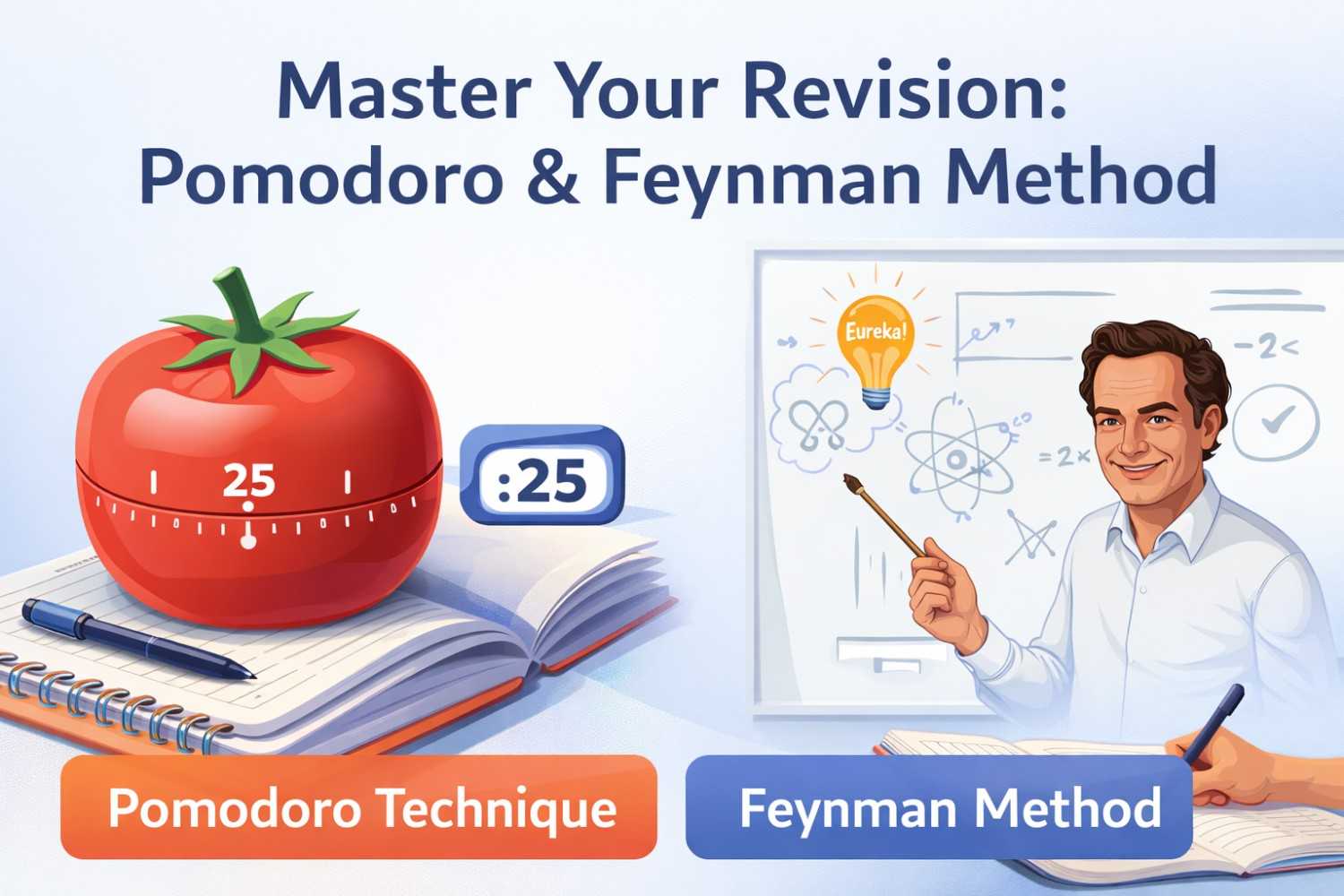
Master Your Revision: Pomodoro & Feynman Method
Table of Contents
Revision can often feel like an uphill battle, fraught with distractions, procrastination, and the nagging feeling that information just isn't sticking. But what if there were simple, yet incredibly effective, strategies to transform your study habits? Enter the Pomodoro Technique and the Feynman Method – a dynamic duo designed to enhance focus, combat burnout, and deepen your understanding.
The Pomodoro Technique: Focus in Bursts
Invented by Francesco Cirillo in the late 1980s, the Pomodoro Technique is a time management method that uses a timer to break down work into intervals, traditionally 25 minutes in length, separated by short breaks. Each interval is known as a 'pomodoro' (Italian for tomato, named after the tomato-shaped kitchen timer Cirillo used).
How it Works:
- Choose a Task: Select one specific revision task you want to accomplish.
- Set a Timer: Set your timer for 25 minutes.
- Work with Focus: Concentrate intently on your task until the timer rings. Resist all temptations to multitask or get distracted.
- Take a Short Break: Once the 25 minutes are up, take a 5-minute break. Stand up, stretch, grab a drink – anything to step away from your work.
- Repeat: After four pomodoros, take a longer break (15-30 minutes).
Why it's Great for Revision:
- Combats Procrastination: The commitment to just 25 minutes feels less daunting.
- Enhances Focus: Knowing a break is coming helps maintain concentration.
- Prevents Burnout: Regular breaks keep your mind fresh and reduce fatigue.
- Improves Time Awareness: You'll quickly learn how much you can realistically achieve in a 'pomodoro'.
The Feynman Method: Learn by Teaching
Named after Nobel Prize-winning physicist Richard Feynman, this technique is a powerful mental model for learning complex concepts. Feynman was known for his ability to explain intricate ideas in simple terms, and this method essentially teaches you to do the same.
How it Works:
- Study the Concept: Choose a topic you want to understand deeply. Study it as you normally would.
- Teach it to a Child (or a layperson): Pretend you're explaining the concept to someone who knows nothing about it. Use simple language and avoid jargon. Write it down or speak it aloud.
- Identify Gaps: As you explain, you'll inevitably stumble, realize you don't fully grasp a certain part, or use complex terms you can't simplify. These are your knowledge gaps.
- Go Back and Review: Return to your study materials and re-learn the parts you struggled with. Fill in those gaps.
- Simplify and Reiterate: Repeat the 'teaching' process until you can explain the concept clearly, concisely, and confidently, without relying on complex terminology.
Why it's Great for Revision:
- Deepens Understanding: Forces you to move beyond surface-level memorization to true comprehension.
- Active Recall: Actively retrieving information strengthens memory pathways.
- Highlights Weaknesses: Quickly identifies areas where your understanding is fuzzy.
- Simplifies Complex Ideas: Helps you break down daunting topics into manageable parts.
Combining the Powerhouses
These two techniques complement each other beautifully. Use the Pomodoro Technique to create focused, distraction-free blocks of time for your revision. During these 25-minute sprints, you can actively engage with the material using the principles of the Feynman Method.
For example, during a pomodoro, you might:
- Actively read a chapter, taking notes.
- Attempt to explain a concept from memory as if teaching it.
- Review flashcards, then try to articulate the answer without looking.
Then, during your 5-minute break, you can briefly reflect on any 'gaps' you identified, preparing to address them in your next focused session or a longer review period.
By integrating the structured focus of the Pomodoro Technique with the deep learning of the Feynman Method, you're not just studying more – you're studying smarter. Give them a try and transform your revision process into a more effective, less stressful, and ultimately more rewarding experience.