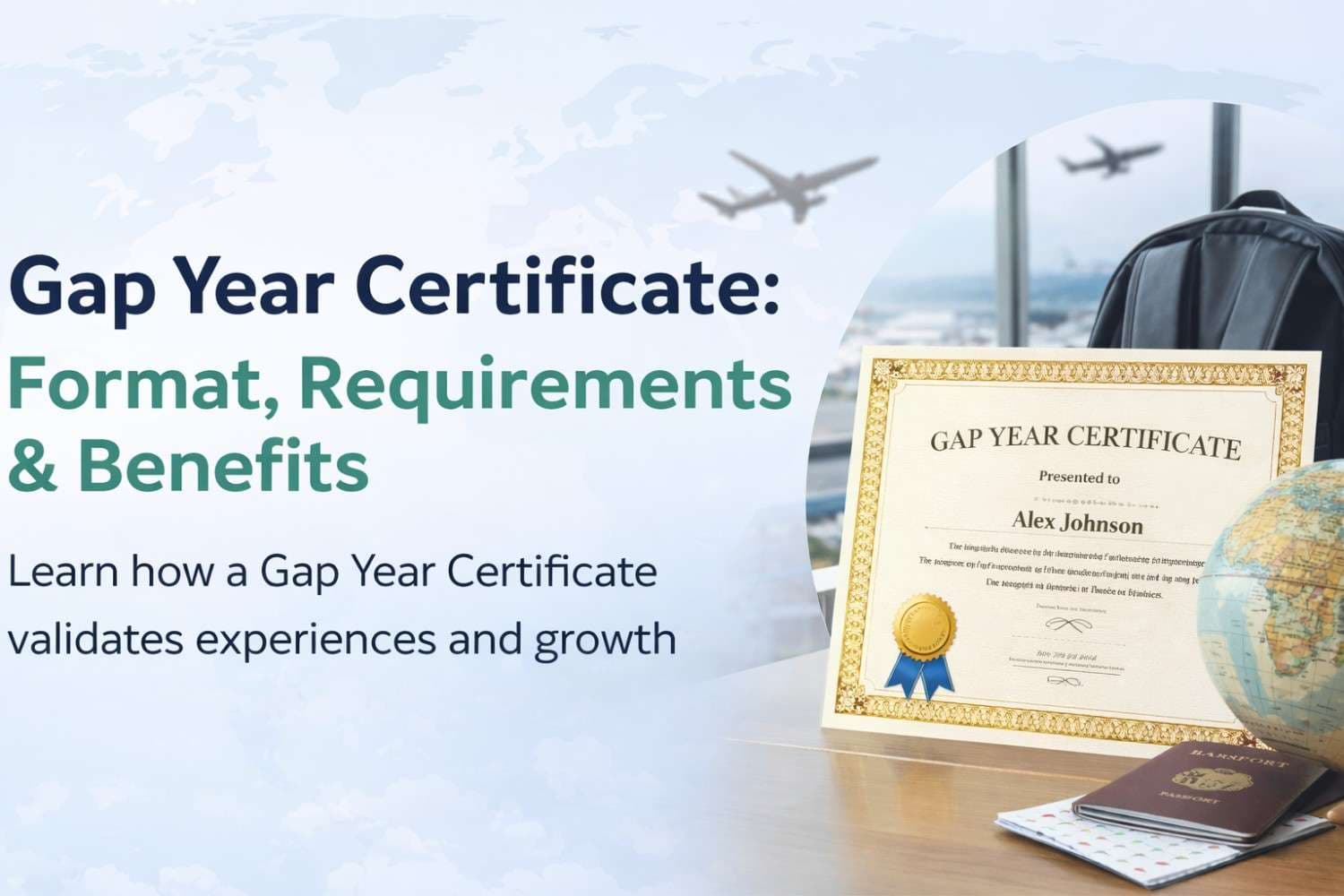
Gap Year Certificate: Format, Requirements & Benefits
Table of Contents
A gap year offers an unparalleled opportunity for personal growth, skill development, and exploration outside traditional academic or career paths. While the experiences themselves are invaluable, articulating and formally recognizing these achievements can sometimes be a challenge. This is where the concept of a ‘Gap Year Certificate’ comes into play – a document designed to validate and showcase the learning and development that occurs during this transformative period.
What is a Gap Year Certificate?
A Gap Year Certificate isn't a universally standardized or formally recognized qualification like a degree or diploma (yet!). Instead, it's typically a personalized document or portfolio that compiles and verifies the skills, experiences, and learning outcomes acquired during a gap year. It serves as a comprehensive record, moving beyond a simple list of activities to highlight the deeper impact of your journey.
Why Pursue a Gap Year Certificate?
- Formal Recognition: Provides a structured way to present your gap year accomplishments to universities or employers, who might otherwise struggle to interpret diverse experiences.
- Skill Articulation: Helps you identify and articulate the soft skills (e.g., problem-solving, adaptability, cultural awareness, communication, resilience) and hard skills gained.
- Enhanced Applications: Strengthens your applications for higher education or jobs by demonstrating initiative, maturity, and a breadth of real-world experience.
- Personal Reflection: Encourages valuable self-reflection, allowing you to synthesize your experiences and understand their significance for your personal and professional development.
- Competitive Edge: Differentiates you from other applicants by showcasing practical experience and a proactive approach to learning and self-improvement.
Typical Format of a Gap Year Certificate
While formats can vary, a robust Gap Year Certificate or portfolio often includes the following sections:
- Personal Details: Your name, contact information, and the duration of your gap year.
- Overview/Mission Statement: A brief personal statement outlining your goals for the gap year and what you aimed to achieve.
- Chronological Log of Activities: A detailed breakdown of your activities, including dates, locations, organizations involved, and a description of your role/participation (e.g., volunteering, travel, internships, work, courses).
- Skills Gained Section: A list of skills developed or enhanced, backed by specific examples from your experiences. Categorize them into soft skills (communication, leadership, problem-solving) and hard skills (e.g., language proficiency, specific technical skills).
- Learning Outcomes & Reflections: Personal essays or journal entries reflecting on challenges faced, lessons learned, cultural insights, and how these experiences have shaped your perspective and future aspirations.
- Evidence/Documentation: Supporting documents such as letters of recommendation, certificates from short courses, photos, blog entries, testimonials from supervisors, or project portfolios.
- Future Impact: How the gap year has influenced your academic or career goals and what you plan to do next.
Key Requirements for Certification
Since there's no single governing body, 'requirements' largely depend on whether you're creating a self-curated portfolio or participating in a program that offers certification. However, common elements crucial for validity and impact include:
- Detailed Documentation: Keep meticulous records of your activities. This includes dates, locations, contact information for organizations/supervisors, and any official documents (e.g., volunteer certificates, course completion letters, pay stubs).
- Reflective Practice: Regularly journal or write reflective essays about your experiences. This is critical for connecting activities to personal growth and skill development.
- Skill Identification: Actively identify and categorize the skills you are developing throughout your gap year. Don't just list what you did, but what you learned from it.
- Evidence Collection: Gather tangible evidence. This could be anything from photos of projects you worked on, a blog you maintained, or even a presentation you gave.
- Self-Assessment & Evaluation: Periodically assess your progress against your initial goals and evaluate the impact of your experiences.
- (Optional) External Endorsement: If your gap year includes formal programs or internships, seek letters of recommendation or performance reviews from supervisors.
Creating Your Own Gap Year Portfolio/Certificate
- Set Clear Goals: Before or during your gap year, define what you want to achieve and what skills you aim to develop.
- Document Everything: Keep a journal, take photos, collect certificates, and save any relevant emails or documents.
- Reflect Regularly: Set aside time each week or month to reflect on your experiences and identify what you're learning.
- Identify & Categorize Skills: As you reflect, list the skills you're developing and provide concrete examples of how you used or improved them.
- Structure Your Portfolio: Organize your collected information into logical sections (e.g., chronological activities, skills matrix, reflections, evidence).
- Seek Feedback: Ask a mentor, teacher, or career advisor to review your portfolio for clarity, completeness, and impact.
The Future of Gap Year Recognition
As the value of experiential learning gains wider recognition, more educational institutions and organizations are developing frameworks or programs to formalize gap year achievements. Some universities offer 'gap year planning' support, while certain non-profits specialize in gap year experiences that culminate in a recognized certificate. While a universal standard is still emerging, the trend towards valuing diverse experiences means a well-constructed Gap Year Certificate will continue to be a powerful tool for personal and professional advancement.
Conclusion
A Gap Year Certificate is more than just a piece of paper; it's a testament to your initiative, resilience, and commitment to lifelong learning. By thoughtfully documenting and reflecting upon your gap year experiences, you can transform a period of personal exploration into a compelling narrative that opens doors to future opportunities and solidifies your understanding of your own capabilities and aspirations.