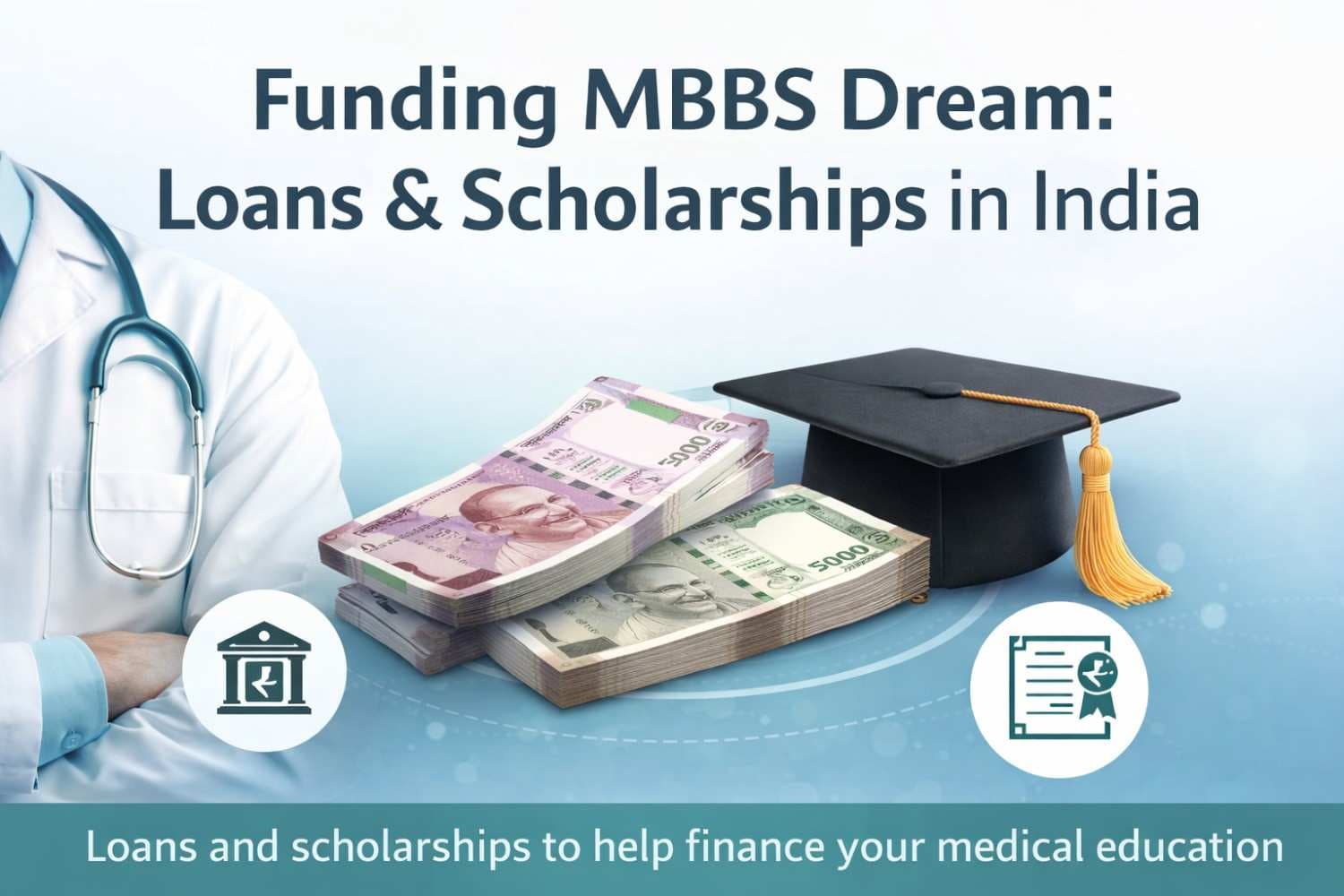
Funding Your MBBS Dream: Loans & Scholarships in India
Table of Contents
Embarking on an MBBS journey in India is a dream for many, but the significant financial investment often acts as a deterrent. The good news is that numerous avenues exist to fund your medical education, ranging from accessible education loans to a diverse portfolio of scholarships. Understanding these options is the first step towards realizing your dream of becoming a doctor.
Education Loans: Your Financial Backbone
Education loans are perhaps the most common way students finance their MBBS degrees. Both public and private sector banks offer attractive schemes tailored for medical students.
Public Sector Banks
Banks like the State Bank of India (SBI), Punjab National Bank (PNB), Canara Bank, and Bank of Baroda offer robust education loan products with competitive interest rates and flexible repayment terms. Key features typically include:
- Lower Interest Rates: Often linked to the MCLR, making them relatively affordable.
- Longer Repayment Tenure: Up to 15 years after a moratorium period (course duration + 6-12 months).
- No Collateral for Smaller Amounts: Loans up to ₹7.5 lakhs often don't require collateral, with parents/guardians as co-borrowers.
- Collateral for Higher Amounts: For loans above ₹7.5 lakhs, collateral (property, fixed deposits, etc.) is usually required.
- Tax Benefits: Interest paid on education loans is deductible under Section 80E of the Income Tax Act.
Many public banks also participate in government schemes like the Central Sector Interest Subsidy (CSIS) Scheme, which provides a full interest subsidy during the moratorium period for students from economically weaker sections (EWS) whose parental income is below ₹4.5 lakhs per annum.
Private Sector Banks & NBFCs
Private banks (e.g., ICICI Bank, Axis Bank) and Non-Banking Financial Companies (NBFCs) like HDFC Credila, Avanse, and InCred also offer education loans. While they might have slightly higher interest rates, they often provide:
- Faster processing and disbursal.
- More flexible eligibility criteria.
- Loans for a wider range of institutions, including those abroad.
Key Considerations for Education Loans:
- Eligibility: Indian national, confirmed admission to a recognized course/institution.
- Documents: Admission letter, academic records, KYC documents, income proof of co-borrower, collateral documents (if applicable).
- Coverage: Tuition fees, hostel fees, examination fees, library/lab fees, purchase of books/equipment, travel expenses for study abroad (if applicable).
Scholarships: Merit, Need, and More
Scholarships are non-repayable grants that can significantly ease the financial burden. They are awarded based on various criteria, including academic merit, financial need, specific categories (SC/ST/OBC/Minorities), and institutional affiliations.
Government Scholarships
The Government of India and various state governments offer a plethora of scholarships:
- National Scholarship Portal (NSP): This is a one-stop platform for numerous central and state government scholarships. Key scholarships relevant to MBBS students include:
- Post Matric Scholarship for SC/ST/OBC Students: For students pursuing post-matriculation courses, including MBBS, subject to income criteria.
- Merit-cum-Means Scholarship for Professional and Technical Courses (Minorities): For students from minority communities pursuing professional courses.
- Prime Minister's Scholarship Scheme (PMSS): For the wards of Ex-servicemen/Ex-Coast Guard personnel.
- State-Specific Scholarships: Many states have their own scholarship schemes for medical students domiciled in that state.
Institutional Scholarships
Many medical colleges and universities offer their own scholarships, endowments, or freeships to deserving students. These can be merit-based or need-based and are usually announced during the admission process or at the start of the academic year. It's crucial to check the specific college's website or prospectus for details.
Private Organizations and NGOs
Several private trusts, foundations, and NGOs are dedicated to supporting education, including medical studies, for underprivileged or meritorious students. Examples include:
- Tata Scholarship: Though primarily for specific courses, some may be applicable or similar trusts exist.
- Reliance Foundation Scholarships: Supports various higher education programs.
- Local community trusts and religious organizations often provide financial aid.
Tips for Securing Funding:
- Thorough Research: Invest time in researching all available loan products and scholarships.
- Check Eligibility: Carefully review the eligibility criteria for each loan and scholarship before applying.
- Prepare Documents: Keep all necessary documents (academic certificates, income proof, identity proof, admission letters) ready and organized.
- Apply Early: Scholarship deadlines can be strict, and loan processing takes time. Apply well in advance.
- Seek Guidance: Don't hesitate to consult with bank officials, college administration, or career counselors for assistance.
The path to becoming a doctor is challenging, but financial constraints shouldn't be the roadblock. With careful planning and informed decision-making, you can secure the necessary funds to pursue your MBBS dream in India. Explore every option, apply diligently, and take a confident step towards your medical career.